Gentle hands • Whole-horse care • Serving Arizona

Help your horse find balance.

Equine craniosacral bodywork uses a light, attentive touch to support relaxation, mobility, body awareness, and the horse’s natural capacity to rebalance.

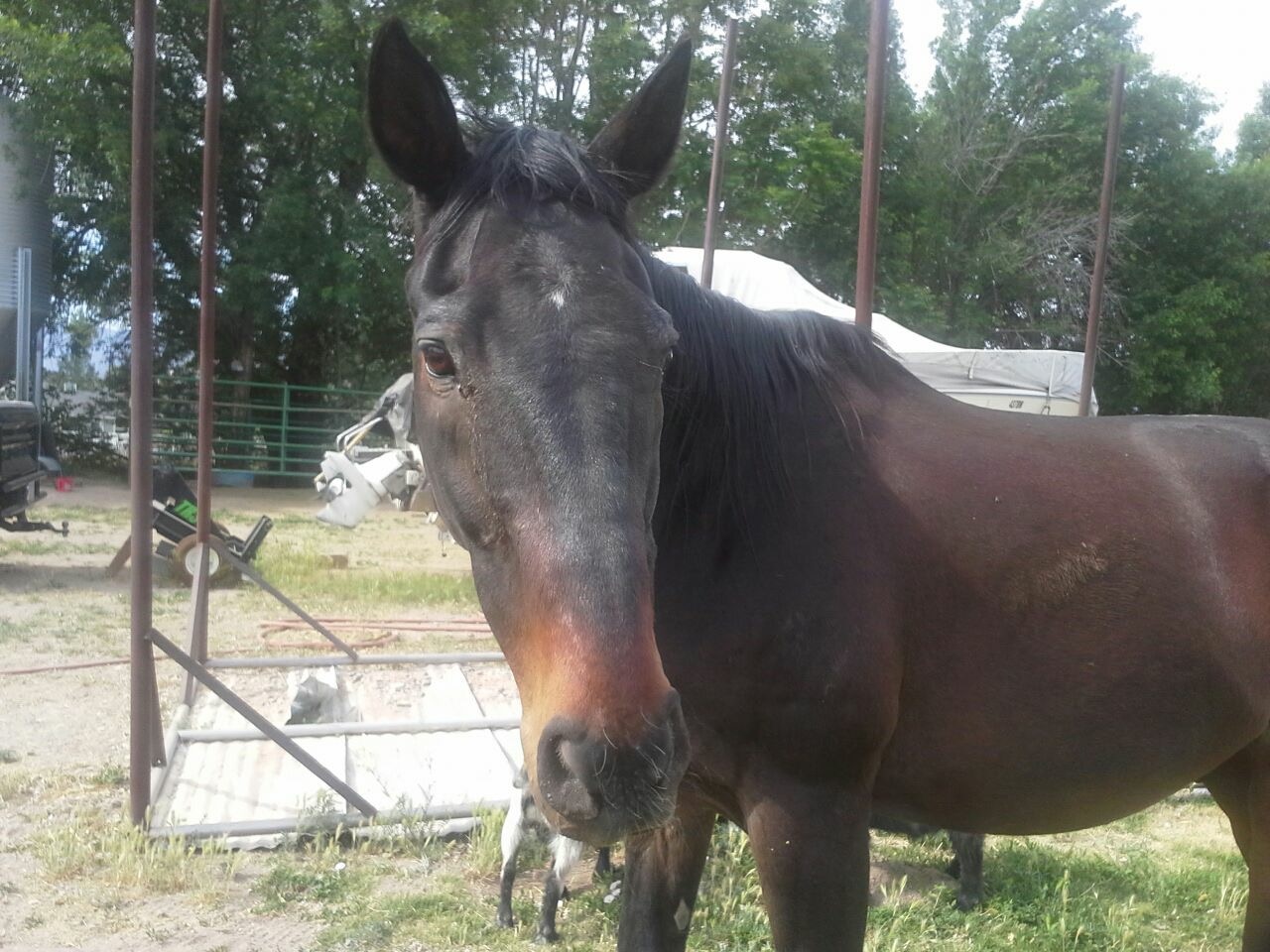
Romeo, Chelise Largent’s once-in-a-lifetime heart horse
RomeoMy once-in-a-lifetime heart horse and first love. Forever part of the journey.
Diamond L brand mark
What is equine craniosacral bodywork?

A quiet approach to the whole horse

Equine craniosacral bodywork is a gentle, non-invasive hands-on modality focused on the craniosacral system and its relationship with the nervous system, fascia, posture, and movement. Sessions follow the horse’s responses rather than forcing change.

When a horse feels safe enough to soften, the whole body can begin a different conversation.

Diamond L approaches each horse as an individual—listening through the hands, allowing time for processing, and working within the horse’s comfort.

Meet Chelise Largent

How I found craniosacral therapy… completely by accident

Sometimes the path you’re supposed to be on finds you in the strangest ways. Mine started with a horse wreck, three years of pain…and, believe it or not, an FFA bake sale.

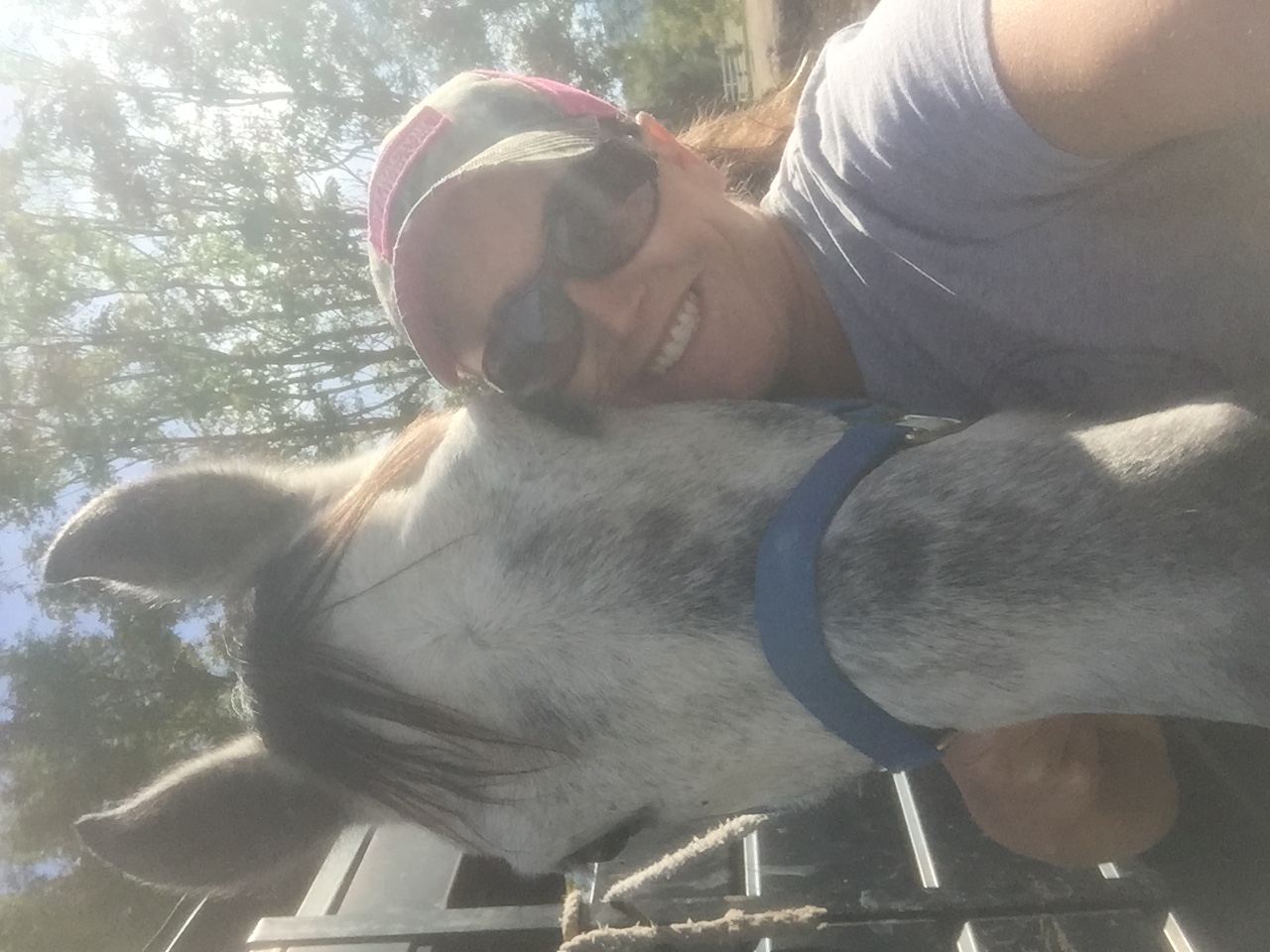
Chelise sharing a close moment with a gray horse

In 2018, I was in a serious wreck with a horse I had owned for five years. I broke my collarbone, six ribs, fractured my pelvis in two places, broke the top of my hip bone, and suffered significant muscle and nerve injuries. To put it mildly, I got pretty banged up.

I healed—but I never really felt healed. For the next three years, I lived with a lot of pain. Like most horse people, I just kept pushing through it. Then one day, an FFA bake sale changed everything.
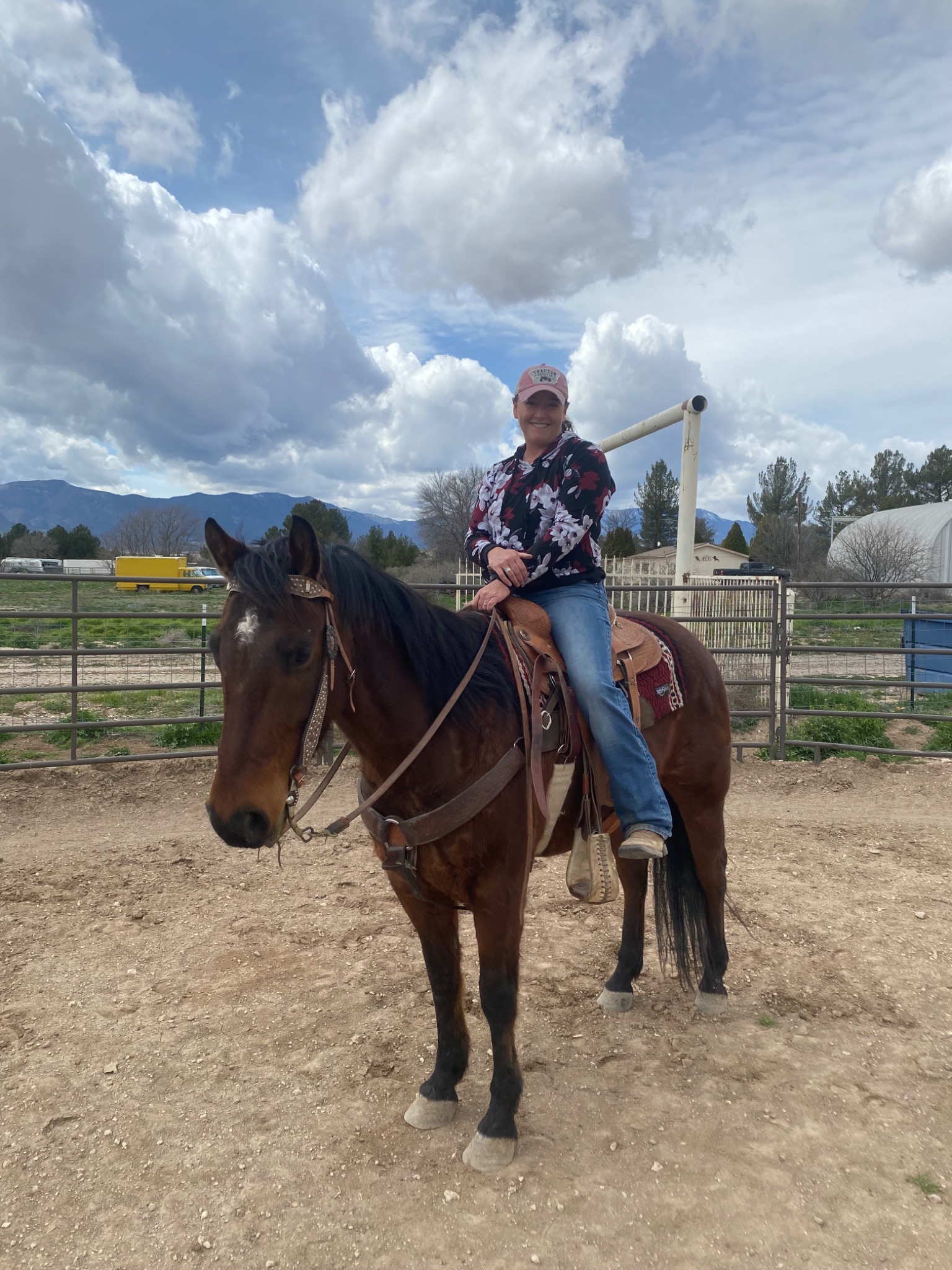
Chelise riding a brown horse

I had enlisted the help of Nikki Preston Wiley, owner of Wiley Wave Therapy. While we were together, Nikki noticed that I kept lifting one foot and then the other, trying to take pressure off my hips because they were hurting. She looked at me and asked, “When were you in an accident?”

I remember thinking, how in the world did she know that? She asked how long ago it had happened and told me that she practiced craniosacral therapy.

Naturally, my next question was, “What in the heck is craniosacral therapy?” Nikki explained that it’s a gentle, biodynamic, hands-on approach that works with the craniosacral system and the body’s natural rhythms, helping release restrictions and supporting the body’s own ability to regulate and restore balance.

She probably explained it much better than that—but at the time, most of it was WAY over my head. I basically thought, “Okay… I have no idea what you just said, but if you think this might help me, I’m in.”

She told me she would get me in if she had a cancellation. Well…she had a cancellation, so I went. And that appointment changed the direction of my life.
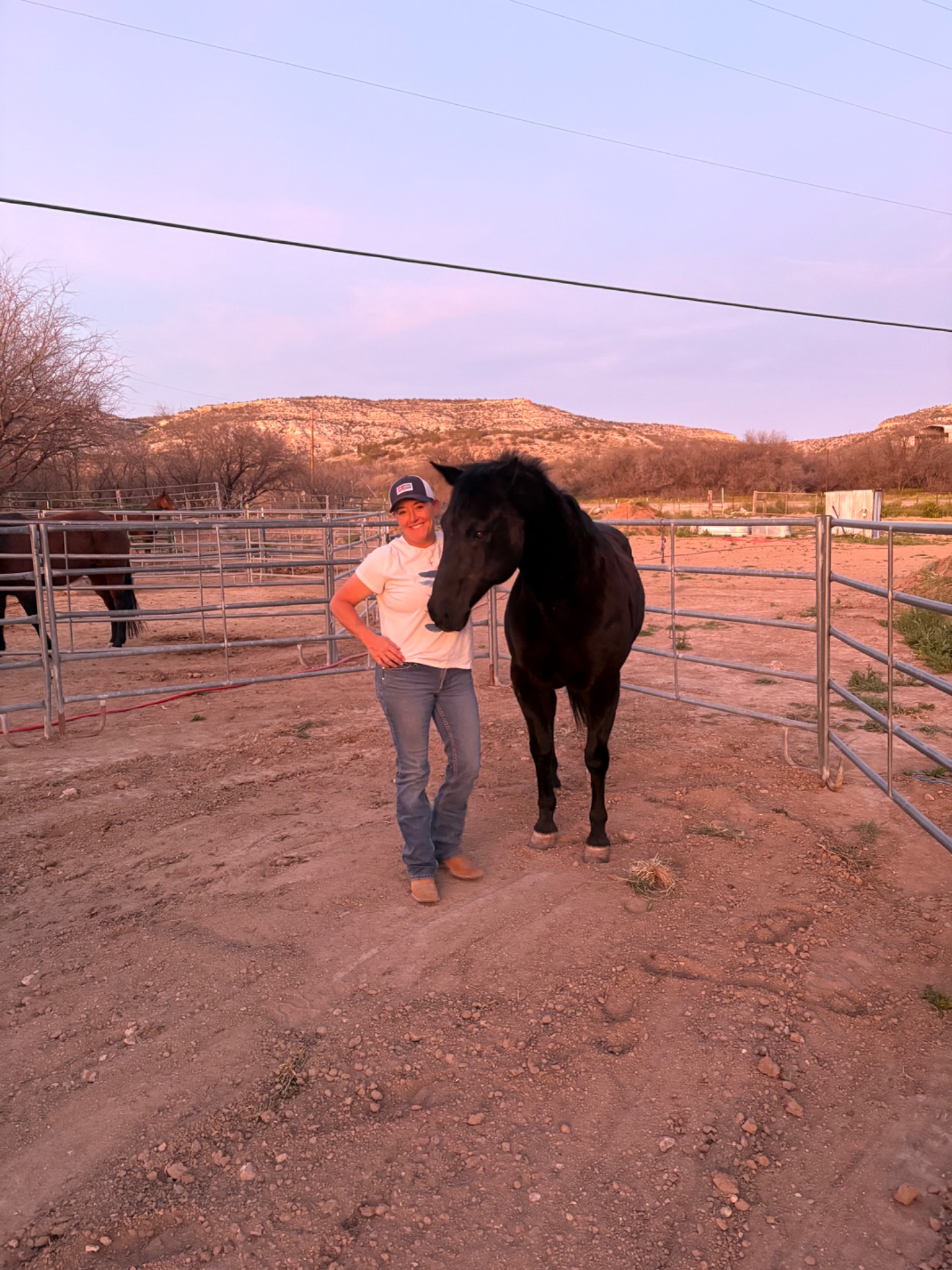
Chelise standing beside a black horse at sunset

After one session, I walked out feeling about 95% better. After three years of hurting, compensating, and trying to find relief, I was stunned. And because even when I’m trying to fix myself, my brain is still thinking about horses, one of my first questions was: “Can you do this on a horse?” Her answer? “Absolutely.” And that one little word planted a very big seed.

Two years later, I enrolled in school to study craniosacral therapy myself. After graduating, I began applying what I had learned to the animals that have always held such an important place in my life—horses. And that is ultimately how Diamond L Craniosacral & Bodywork came to be.
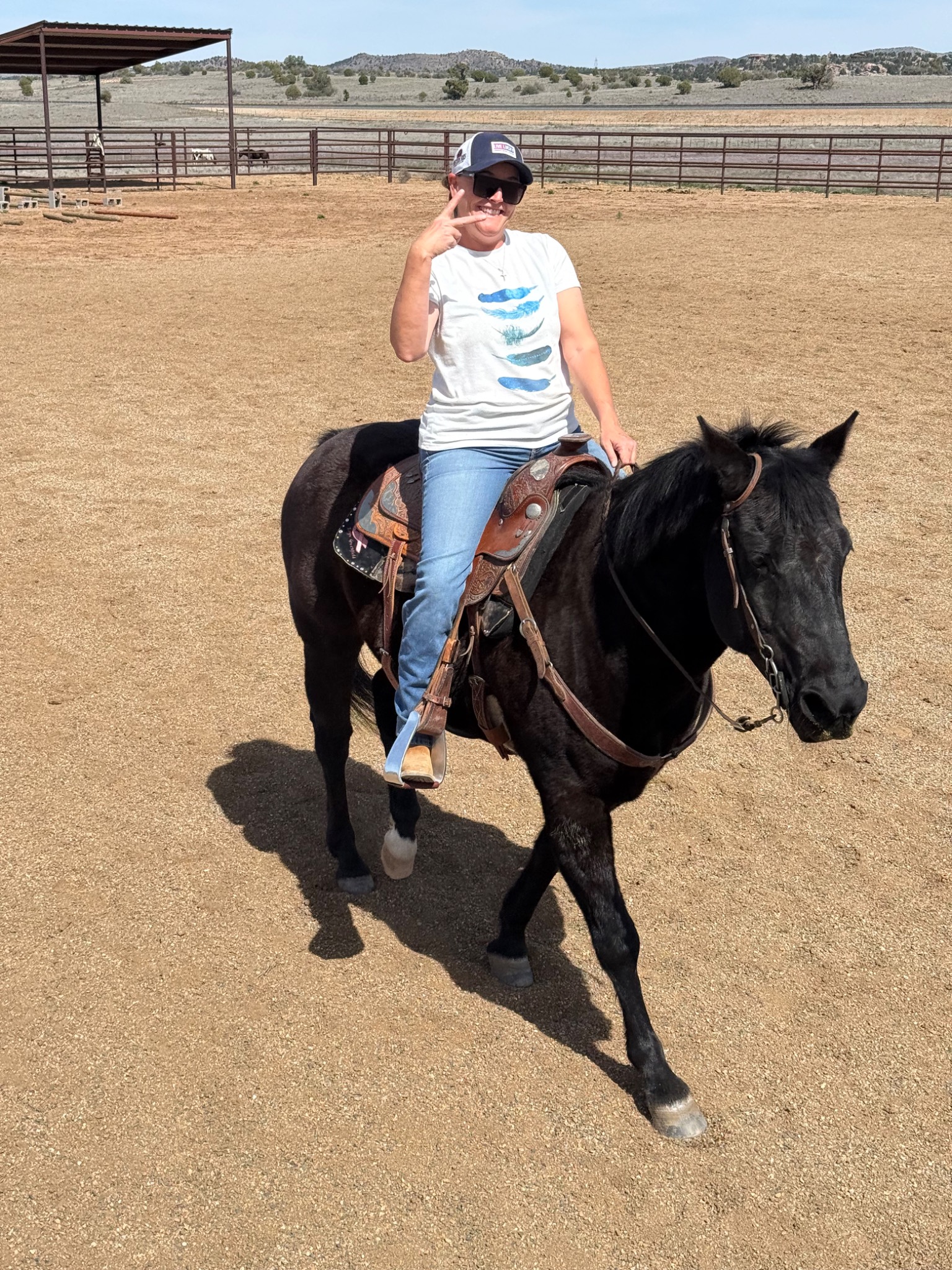
Chelise riding a black horse in an arena

I didn’t discover craniosacral therapy because I was searching for a new career. I discovered it because I needed it. I know firsthand what it feels like when your body has been through trauma, and I know what it feels like when it finally begins to soften and let go. That experience changed the way I look at horses, too.

Horses can’t point to where it hurts. They compensate, protect, and adjust the way they move. Sometimes the little things we notice—a shortened stride, a guarded neck, a change in attitude, or simply a horse that just seems off—are their way of communicating with us.

My job is to listen.

To listen with my eyes, my hands, and everything the horse is telling me. Every story is different. And every session begins with the horse standing in front of me that day.

And every time I put my hands on a horse, I’m reminded of the very unexpected journey that brought me here. A horse wreck. Three years of pain. A chance meeting with Nikki Preston Wiley…and an FFA bake sale. Funny how life works sometimes. ♡
Potential benefits

Support that reaches beyond one sore spot

Every horse responds differently. Owners commonly seek craniosacral bodywork to support the following areas.

◉

Nervous-system regulation

Encourages deep relaxation and may help a horse shift out of a guarded, high-alert state.

↔

Comfort & mobility

Supports ease through the poll, jaw, neck, spine, shoulders, ribs, pelvis, and limbs.

〰

Fascial release

May help soften patterns of restriction held through the body’s connective-tissue network.

◇

Postural balance

Supports body awareness, alignment, balance, and more organized movement.

✦

Performance support

Can complement thoughtful conditioning and recovery routines for working and performance horses.

♡

Emotional release

Creates space for settling and “unwinding” patterns that may follow stress or difficult experiences.

⌁

Poll, jaw & head comfort

Gentle attention may support horses showing bracing, head sensitivity, or difficulty relaxing through the topline.

△

Recovery partnership

May be used alongside veterinary-directed care to support comfort and overall well-being during recovery.

◎

Whole-body connection

Recognizes that compensation in one area can influence movement and comfort elsewhere.

Real horses • Individual stories

From the Diamond L casebook

Bodywork is about observing the horse in front of us—before, during, and after each session.

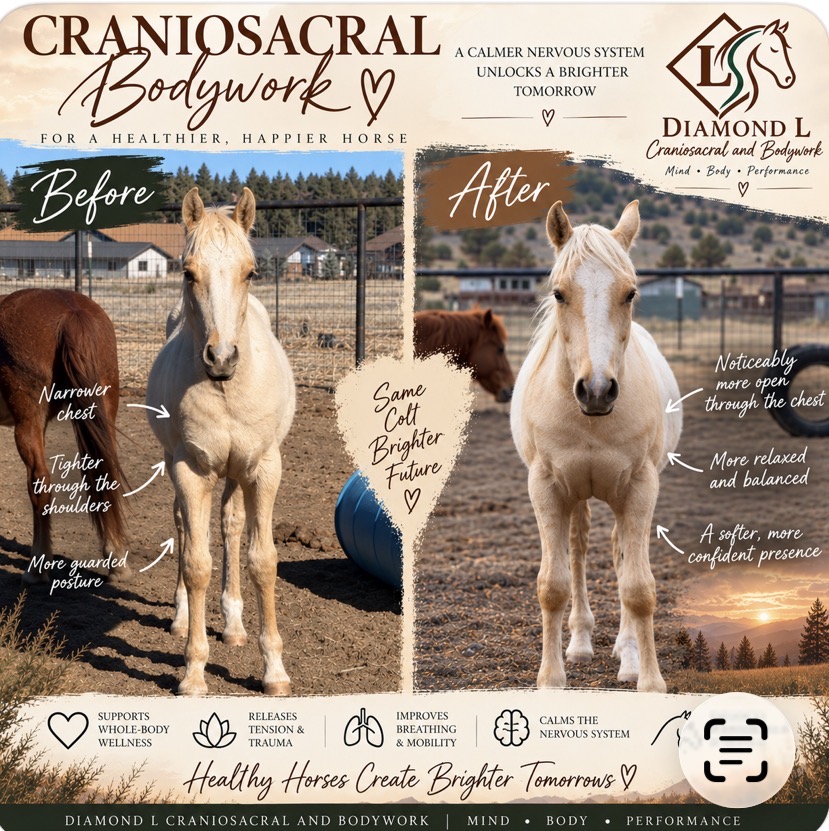
Before and after comparison of a colt showing a more open chest and relaxed posture following bodywork

Opening through the chest

The focus: A colt presenting with a closed, guarded appearance through the chest and front end.

The session: Gentle whole-body craniosacral work gave him time to process, soften, and reorganize without force.

What we observed: A more open appearance through the chest and a softer overall posture after the session.

Observations describe this individual horse; results vary.

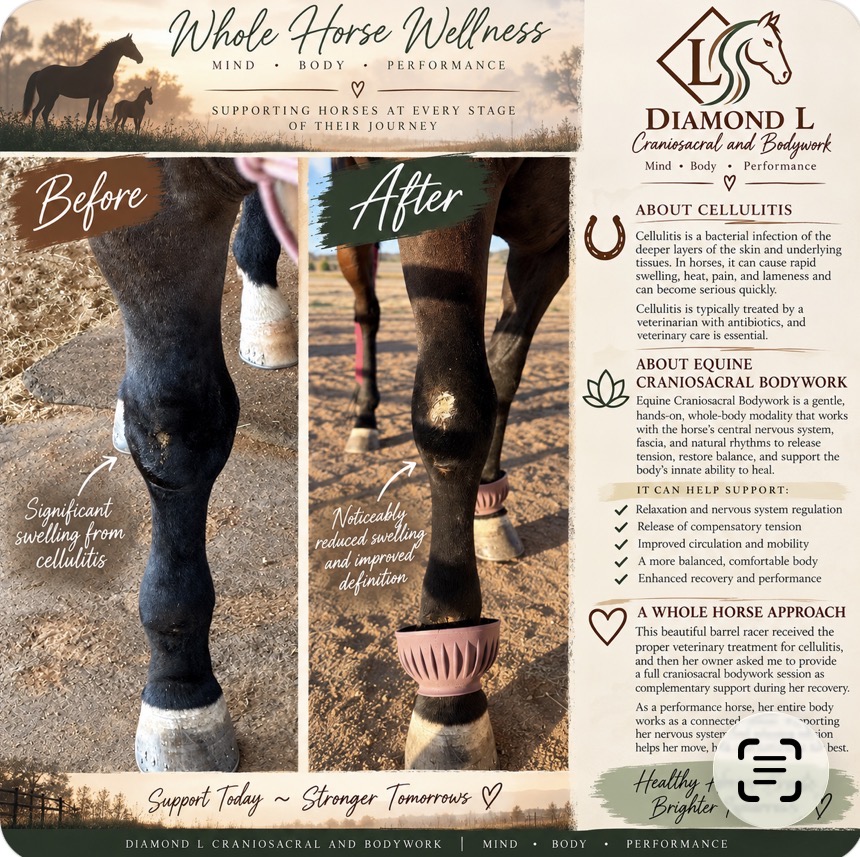
Before and after comparison of swelling in a barrel horse's front leg during recovery from cellulitis

Supporting a barrel horse

The situation: A barrel horse developed cellulitis in a front leg and received veterinarian-directed antibiotic treatment.

The bodywork: Her owner chose a full craniosacral session as complementary support for relaxation, whole-body comfort, and recovery.

Why whole-horse care matters: When one limb is uncomfortable, a horse may compensate elsewhere. Gentle bodywork can support the rest of the body while primary medical care addresses the condition.

Craniosacral bodywork does not treat cellulitis or replace veterinary care.

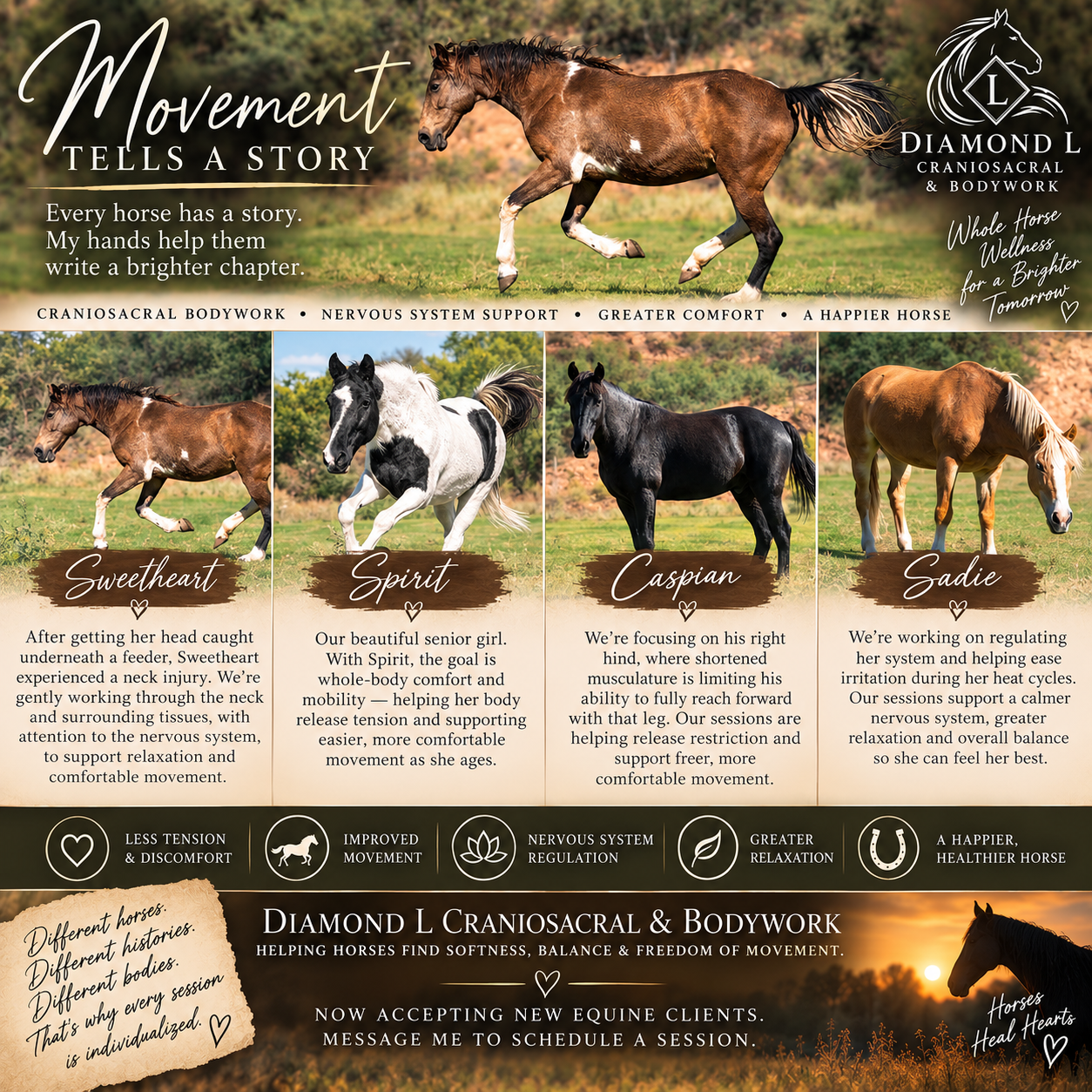
Movement Tells a Story casebook featuring Sweetheart, Spirit, Caspian, and Sadie and their individualized craniosacral bodywork goals

Movement tells a story

Every horse arrives with a different history, body, and need. Sweetheart is receiving gentle support following a neck injury; senior mare Spirit is supported for whole-body comfort and mobility; Caspian’s sessions focus on restriction through his right hind; and Sadie receives support for relaxation and nervous-system regulation.

The common thread: Every Diamond L session is individualized to the horse standing in front of me that day—with the goal of greater comfort, balance, relaxation, and freedom of movement.

Equine craniosacral bodywork is complementary wellness support. Individual responses vary, and veterinary concerns should be evaluated by a licensed veterinarian.

A calm, horse-led experience

What a session may look like

1

Listen & observe

We begin with your horse’s history, current concerns, posture, movement, and comfort.

2

Gentle hands-on work

Light contact follows the horse’s responses. Pauses, licking, chewing, yawning, lowering the head, and quiet stillness may occur.

3

Integrate

The horse is given time to process. We discuss observations and practical after-session support.

Kind words

Horse-owner experiences

This space is reserved for verified feedback from Diamond L clients.

★★★★★
“Hi sunshine! Cruised Stoney at a race this morning. He was super supple in his warm-up—feels really good! Thank you, friend! 😘”
Sadie Regarding her horse, Stoney
★★★★★
“Chelise—Bo the Mustang is a different horse after your expert technique. Thanks!”
Duke F. Regarding his horse, Bo the Mustang
★★★★★
“Chelise has been working on our horses, Ace and Paycheck. They’re pretty big boys, and it’s amazing how craniosacral bodywork helps horses all the way around. It’s a miracle—our boys love it! Chelise has great hands and is very good at what she does. Not many people have the gift that she has. We recommend her 100%. Try it—your horse won’t be disappointed!”
Judy Owner of Ace & Paycheck
★★★★★
“Chelise is a miracle worker. She has healing hands ❤️❤️”
Elise S. Glendale, Arizona
Let’s talk about your horse

Book a Diamond L session

Tell me what you are noticing, what your horse has experienced, and what you hope to support. Diamond L proudly serves horse owners throughout Arizona.

Request a conversation

Submitting opens your email app with your message ready to send.